Hair fall in women: kitna normal hai, kab problem hai, aur kya hair transplant chalega?
How much hair fall is normal for women, when it is a problem, the real causes, and when a hair transplant works for women (no full shave for most).

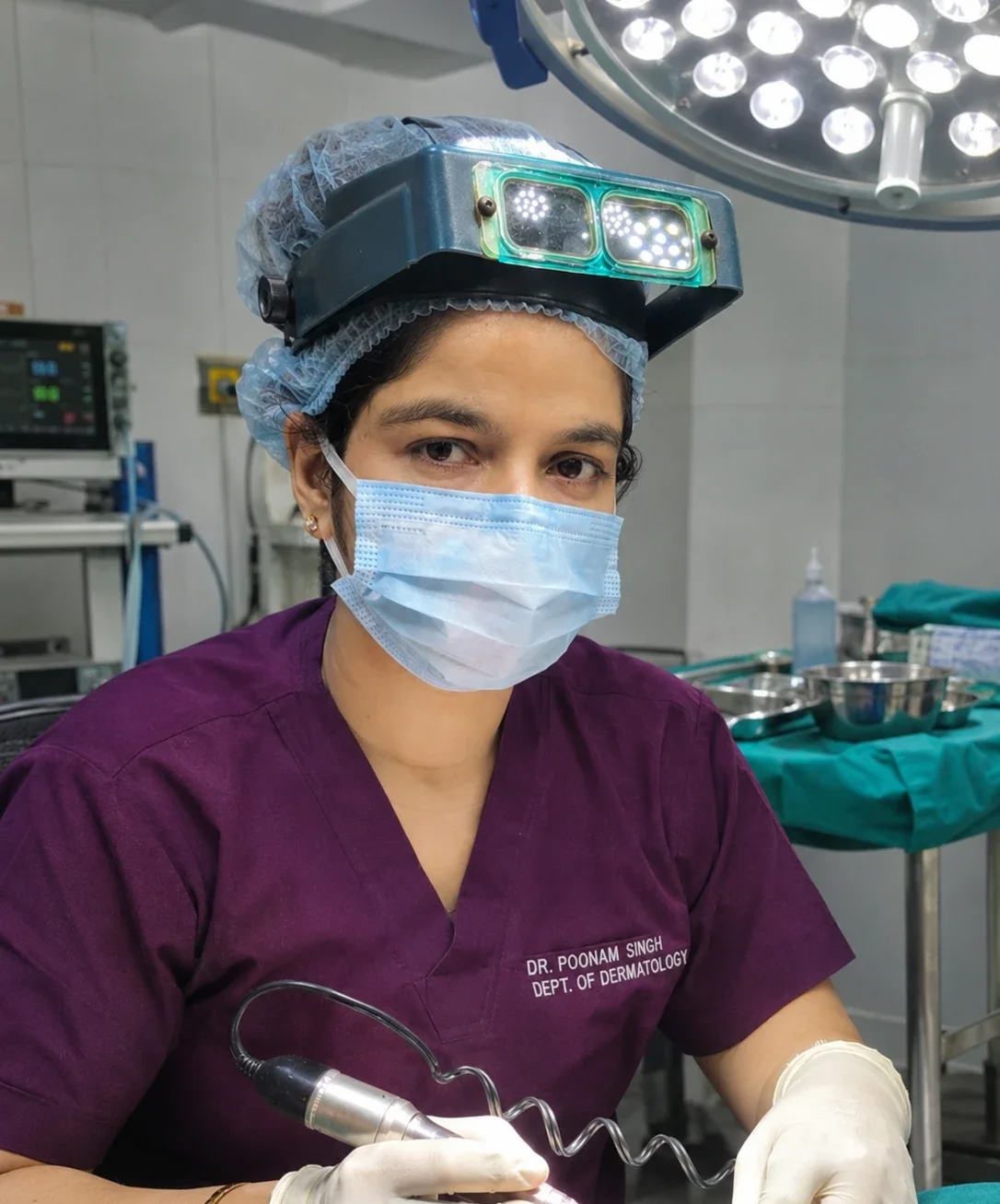
Your doctor at VS Derma
MD Dermatology, Gold Medalist · Dermatologist & hair transplant surgeon · VS Derma Clinic, Bali Nagar, New Delhi
★ 4.9 on Google from 402 patient reviews
It usually starts in the bathroom. A clump of hair in the drain after a head wash. Then strands on the pillow, on your dupatta, on the floor you just swept. You change your shampoo, your oil, start eating more walnuts. Someone in the family says “sab ke jhadte hain”, someone else forwards a reel about onion juice.
And somewhere in the middle of the night you search: “kitna hair fall normal hai”, “hair fall in female reason”, “can women get hair transplant”.
This article answers those questions in order: how much is normal, when it is a real problem, why it happens to women, what actually works, and whether a hair transplant is right for you. It is long, because the honest answer depends on which kind of hair fall you have.
Kitna hair fall normal hai? (How much hair fall is normal in a day?)
About 50 to 100 hairs a day is normal, according to the American Academy of Dermatology. Every hair grows for a few years, rests, and then falls so that a new one can grow from the same root. With roughly a lakh hairs on the head, losing 50 to 100 a day is just that cycle running.
Two things confuse people:
- Wash day looks worse. If you wash your hair only two or three times a week, the hairs that loosened over the last few days all come out in the shower at once. A hundred and fifty hairs on wash day can still be normal.
- Long hair looks like more. Fifty long strands on a white floor look like a lot more than fifty short ones.
A simple check at home: for three days, collect every hair you lose (comb, pillow, shower) in an envelope, without washing on one of those days. If you are clearly and regularly far above 100, or it keeps rising week after week, it is worth seeing a dermatologist.
When is hair fall a real problem?
The number of hairs in the drain matters less than what is happening on your head. See a dermatologist if you notice any of these:
| You notice | What it can mean |
|---|---|
| Your parting is getting wider, especially in front | Female pattern hair loss |
| Your ponytail feels thinner than a year ago | Long-lasting shedding or pattern hair loss |
| Scalp shows under bright light or in photos | Thinning, not just shedding |
| Heavy shedding for more than about six months | Chronic shedding, or more than one cause |
| Round bald patches | Alopecia areata, which needs treatment |
| Thinning at the temples or hairline from tight buns, braids or clips | Traction hair loss |
| Hair fall with irregular periods, acne or facial hair | Possible PCOS |
| Hair fall with tiredness, weight change, feeling cold | Possible thyroid problem |
| Itching, flaking, redness or pain on the scalp | Dandruff, fungal infection or a scalp disease |
If none of these apply and you are within 50 to 100 hairs a day, the honest advice is: you probably do not need treatment. Eat well, be gentle with your hair, and recheck in a couple of months.
Hair fall in female: the real reasons
Women’s hair loss is rarely about the oil or the shampoo. The common causes are:
1. Shedding after a shock to the body (telogen effluvium)
Two to three months after a high fever, dengue, typhoid, COVID, an operation, a delivery, a crash diet or a very stressful period, a large number of hairs move into the resting phase together and then fall. Doctors call this telogen effluvium.
It is frightening, but the roots are not damaged. Once the trigger is over, the hair usually returns over six to nine months. The delay is what confuses people: you were ill in August, the hair falls in October, and you blame the new shampoo. After a baby the same thing happens: heavy hair fall two to four months after delivery is common and usually settles by six to twelve months.
2. Low iron and other deficiencies
Many Indian women have low iron stores even when their haemoglobin is “normal”. Doctors often check ferritin, which shows the body’s iron stores. Low vitamin D and B12 are also common. Crash diets and very low-protein diets show up on the scalp a few months later.
3. Thyroid
Both an underactive and an overactive thyroid can cause diffuse hair fall. A simple TSH test checks this.
4. PCOS
In PCOS, higher male-type hormones can thin the hair on the top of the head, while increasing hair on the face and body. If your hair fall comes with irregular periods, acne or facial hair, tell your doctor.
5. Female pattern hair loss
This is the most common long-term cause, and it often runs in the family. The front hairline usually stays, but the parting widens and the top of the head becomes thinner, slowly, over years. The AAD and DermNet both note that early treatment works best, because it is easier to keep hair than to bring it back.
6. Hairstyles and hair treatments
Tight ponytails, buns, braids, extensions and heavy clips pull on the hair at the hairline and temples (traction hair loss). Repeated straightening, smoothening, rebonding and bleaching damage the hair shaft, so hair breaks rather than falls from the root. Both are common and both are preventable.
Often, it is not one cause but two or three together: for example, low iron plus a stressful year plus early pattern hair loss.
Baal jhadna kaise roke? What actually works
First, what does not fix true hair loss: changing your shampoo every month, onion juice, hot oil massages, and “hair fall control” serums with no active medicine in them. A good oil can make hair look nicer, but it cannot correct low iron, thyroid or pattern hair loss.
What a dermatologist actually does:
- Finds the cause. A look at your scalp with a magnifying trichoscope, a gentle pull test, your history (illness, delivery, diet, periods) and, when needed, blood tests.
- Treats the cause. Iron, vitamin D or thyroid treatment if they are low; treatment for dandruff or scalp infection; PCOS treatment with your gynaecologist.
- Protects and regrows the hair you have. For pattern hair loss, minoxidil applied to the scalp is the most widely used medicine for women, and some women also need tablets on prescription. Results take three to six months, and minoxidil often causes a short extra shed in the first weeks, which is a sign it is working, not failing.
- PRP, when it fits. PRP uses your own blood’s platelets to support weak roots. It can help in pattern hair loss and long-lasting shedding, usually as three or four sessions about a month apart, then maintenance, and works best together with medicine.
Treatment for female hair loss is a slow, steady job. Most women see the shedding settle first, then the parting looks fuller after six months or so.
Can women get a hair transplant?
This is the question most women are afraid to ask, so here is the straight answer.
Yes, some women can, but most women with hair fall do not need one and will not benefit from one.
A hair transplant does not create new hair. It moves healthy roots from the back of your head (the donor area) to the thin area. So it only works if:
- the thin area is limited, and
- the hair at the back of your head is thick and healthy.
When a transplant can work well for a woman
- A high or receding hairline, or thin temples, especially if it runs in your family
- Traction hair loss at the hairline and temples, once the pulling has stopped and the hair loss is stable
- Scars, for example after an injury, a burn or a facelift
- Stable female pattern hair loss limited to the front and top, with a strong donor area, in addition to medicine
- Thin eyebrows that have not grown back after years of plucking or threading
When a transplant is usually not the answer
- Thinning all over the scalp, including the back. If the donor area is also thin, there is nothing good to move, and taking roots from it can make it thinner. ISHRS describes this diffuse pattern as the main reason many women are not good candidates.
- Active shedding (telogen effluvium) after an illness or delivery: the hair is likely to return by itself.
- Untreated causes such as low iron, thyroid problems or uncontrolled PCOS.
- Alopecia areata and some scarring scalp diseases while they are active.
Is a female hair transplant permanent?
The transplanted hair usually stays, because it comes from the back of the head. But the rest of your hair can keep thinning, so after a transplant women continue medicine to protect it. A transplant without that plan can look good for two years and thin again around it.
“Pura ganja hona padega?” The biggest fear, answered honestly
For most women this is the real question, bigger than cost or pain. You have spent years growing your hair. The idea of walking into office, a family function or your society lift with a shaved head is enough to make you close the tab.
The short answer: for most women, no. Here is exactly what is trimmed, what is not, and what happens if you do end up with a shaved head.
What is usually trimmed
There are two areas in a transplant: the donor area at the back, where roots are taken from, and the recipient area in front, where they are placed.
| Method | What is trimmed | What people see |
|---|---|---|
| Partial (strip) trim | A band at the back of the head, about one to two inches high, trimmed short | Nothing. Your long hair above it falls over the band and covers it completely |
| No-shave (unshaven) FUE | Only the individual hairs that are being taken, here and there | Nothing. Used for smaller sessions; takes longer, so it can cost more |
| Recipient area | Usually nothing for women | Grafts are placed between your existing hair |
| Full shave | The whole head | Only when a very large area is treated, or when a woman chooses it for convenience |
So for a typical female transplant, such as a hairline, temples or a thin parting, the donor band is hidden under your own hair and the front is not shaved at all. Ask the doctor, before you book, exactly which method they will use for you, and do not agree to a full shave unless you understand why it is needed.
Agar pura ganja ho gaya, baal kab tak wapas aayenge?
Some women do end up with a fully shaved head: because of a large session, because they chose it, or because of an illness or treatment unrelated to a transplant. Scalp hair grows about one centimetre a month, a little more in some people. That gives a realistic timeline:
| Time after shaving | Roughly how long | How it looks |
|---|---|---|
| 1 month | About 1 cm | A very short, even crop |
| 3 months | About 3 to 4 cm | A short pixie cut |
| 6 months | About 6 to 8 cm | A short bob can be shaped |
| 12 months | About 12 to 15 cm | Around the chin |
| About 2 years | Around the shoulders |
Two things to know:
- The donor area grows back normally. FUE takes only a fraction of the roots from any one spot, so the hair there grows back to its usual thickness. What remains are tiny dot scars that are hidden under hair.
- The transplanted hairs follow their own timeline. They fall in weeks two to six and start growing again from about the third or fourth month, then grow at the same one centimetre a month.
“Log kya kahenge?” Society, office and family
Hair loss in women is often treated as vanity, as if you should just accept it. It is not vanity. Thinning hair affects how many women feel about going out, being photographed, even going to weddings. The AAD notes that female pattern hair loss is common, and many women hide it for years. Wanting to treat it is a normal, reasonable decision, and whom you tell is entirely yours to decide.
Practical things that help:
- Plan seven to ten days off, or work from home. By then the swelling has gone and the scabs have fallen; with a partial trim, most people around you will notice nothing.
- What others can see, week by week. Days two to four: mild forehead swelling, which can look like puffy eyes. Days one to ten: small scabs at the front, hidden by a side parting or a loose, clean scarf or dupatta after the first few days (ask your doctor when). After about ten days: usually nothing that strangers notice.
- Pick your timing. Not two or three months before a wedding or big event, because that is when the transplanted hairs shed. Nine to twelve months before gives you the full result.
- A loose scarf, dupatta or cap is fine once your doctor says so, usually after about a week. Avoid anything tight.
- You do not owe anyone an explanation. “Ek chhota scalp procedure hua hai” is enough.
The worry in your head is usually much bigger than what anyone actually sees.
Female hair transplant: recovery
The procedure is the same day-care FUE procedure as for men:
- Local anaesthesia; you are awake, and you go home the same day.
- Mild swelling of the forehead for two to four days; small scabs that fall off in seven to ten days.
- Most women return to office work in three to five days.
- The transplanted hairs shed in weeks two to six, which is normal. New hair starts at three to four months, and the full result shows at nine to twelve months.
More detail in hair transplant results month by month.
How to wash long hair after a hair transplant
Washing is the part women worry about most after the procedure, because long hair is heavy and easy to tangle. Your doctor’s instructions come first; this is the usual method.
Day 1: do not wash. If your clinic gives a saline spray, use it as told to keep the grafts moist.
Day 2 or 3: the first wash, often at the clinic, where you are shown how.
Days 2 to 10, every wash:
- Lean back, not forward. Wash lying back over a sink or with your head tilted back under a mug. Bending forward over a bucket increases forehead swelling.
- Lukewarm water from a mug, not a strong shower or hand-shower jet on the front.
- Wash the lengths separately. Shampoo and condition your long hair below the transplanted area as normal, keeping it away from the grafts.
- For the transplanted area: lather the mild shampoo in your palms first, then dab the foam on gently with flat fingers. No rubbing, no nails. Leave it for two to three minutes and rinse by pouring.
- No conditioner, serum or oil on the transplanted area for the first two weeks.
- Pat the lengths dry with a soft towel and let the front air-dry. No hair dryer on heat.
Days 7 to 10: your doctor may ask you to apply a lotion 20 to 30 minutes before washing and then use gentle fingertip circles to lift the softened scabs. Do not pick them.
After about two weeks: normal gentle washing.
Which shampoo? The mild shampoo your doctor gives or names. If you have not been given one, ask; a mild, fragrance-free baby shampoo is a common choice. Avoid anti-dandruff, medicated or strong “hair fall” shampoos on the transplanted area for the first two weeks unless prescribed.
Other precautions for women:
- No clips, hairbands or tight ponytails touching the transplanted area for about two weeks; tie hair loosely and low.
- Comb gently with a wide-tooth comb, starting from the ends, and keep the comb off the grafts for the first ten days.
- No straightener, curling iron, blow-dry heat, hair colour, keratin or smoothening for about four to six weeks.
- Sleep on your back with the head raised for the first five to seven nights, hair tied loosely to the side.
- Keep sunlight, sweat and dust off the area: a loose cap or scarf when you go out, once your doctor allows it.
The full men’s and women’s aftercare, with precautions before and after, is in hair transplant recovery day by day.
Female hair transplant cost in Delhi
Published Delhi price guides quote roughly ₹30 to ₹120 per graft, for men and women alike, and one analysis shows the same case being quoted very differently at different clinics. These are published market ranges, not VS Derma’s prices.
Women usually need fewer grafts than men, because the work is limited to one area such as the hairline or temples. But a cheaper or smaller transplant is not automatically better value: if you need medicine and PRP first, the honest plan may cost less and avoid surgery altogether. Always get the total in writing after a scalp examination. See also hair transplant cost in Delhi.
Questions to ask your dermatologist
- What is causing my hair fall: shedding, pattern hair loss, a deficiency or more than one?
- Which tests do I need, and why?
- Is my hair fall likely to settle by itself?
- What will I use, for how long, and when should I see a difference?
- Would PRP help in my case?
- Am I a candidate for a transplant now, later, or not at all? Is my donor area strong enough?
About Dr. Punam Singh: the doctor you will see
Dr. Punam Singh is a dermatologist in New Delhi with an MD in Dermatology, awarded with a gold medal. She is a dermatologist, venereologist and leprologist, with special training in hair transplantation and aesthetic procedures, and she performs FUE hair transplants for both male and female pattern hair loss herself. She is the doctor behind VS Derma Clinic, which holds a 4.9★ rating from over 400 Google reviews.
What that means for a woman with hair fall:
- You are examined by Dr. Punam herself, not by a counsellor or a technician. She looks at your scalp under magnification, asks about illness, delivery, diet and periods, and orders only the tests you need.
- The cause is treated first. Most women leave with a plan of treating the cause, medicine and, where it helps, PRP, not surgery.
- If a transplant is right, for example for a high hairline, thin temples or traction hair loss, she tells you exactly what will be trimmed, plans your hairline and performs the FUE transplant herself.
- The full cost is in writing before you decide, and she sees you herself at your follow-ups.
Where to see her:
- Dwarka: 2nd Floor, Pacific D21 Mall, Sector 21, near Dwarka Sector 21 metro. Dr. Punam in Dwarka
- West Delhi: VS Derma Clinic, Bali Nagar, opposite metro Pillar 367, near Ramesh Nagar metro. Visit the clinic
Book on 093192 18780 (call or WhatsApp) or book a consultation online. Read more about Dr. Punam Singh, hair fall treatment and PRP, hair transplant at VS Derma, and, if you are planning a transplant, the recovery day by day and how to choose a hair transplant surgeon.
Powered by QVitals Health, the health-tech brand behind the VS Derma Journal.
Questions people ask
Kitna hair fall normal hai? (How much hair fall is normal for a woman in a day?)
About 50 to 100 hairs a day is normal. On the day you wash your hair, especially if you wash only two or three times a week, you may see more, because the hairs that loosened over the last few days come out together.
How do I know if my hair fall is a real problem?
Watch for a parting that is getting wider, a ponytail that feels thinner, scalp showing under bright light, hair fall that has gone on for more than about six months, or bald patches. Any of these means you should see a dermatologist rather than change your oil or shampoo.
Why do women lose hair?
The common causes are shedding two to three months after a fever, illness, delivery, surgery, stress or crash dieting; low iron; thyroid problems; PCOS; and female pattern hair loss, which runs in families. Many women have more than one cause at the same time.
Can women get a hair transplant?
Yes, but only some women. A transplant works when the thinning is in one area, such as a high or receding hairline, thin temples, a scar or traction hair loss from tight hairstyles, and the hair at the back of the head is thick. If the hair is thin all over the scalp, including the back, a transplant is usually not a good idea.
Is a female hair transplant permanent?
The transplanted hair usually is, because it comes from the back of the head, where roots are more resistant. Your own hair around it can keep thinning, which is why women need medicine to protect it after a transplant.
Pura ganja hona padega? (Do women have to shave their head for a hair transplant?)
For most women, no. Usually only a band at the back, one to two inches high, is trimmed and hidden under the long hair above it, and the front is not shaved at all. For small sessions, no-shave FUE trims only the hairs being taken. A full shave is needed only for large sessions or if you choose it.
If my head is fully shaved, when will my hair grow back?
Scalp hair grows about one centimetre a month: a short crop at one month, a pixie cut at three months, a short bob at six months, around the chin at a year, and around the shoulders at about two years.
How do I wash long hair after a hair transplant?
From day two or three, lean back rather than forward, pour lukewarm water from a mug, wash the lengths separately, and on the transplanted area only dab the shampoo foam on gently with flat fingers, without rubbing. No conditioner, oil or heat on the area for two weeks.
What does a female hair transplant cost in Delhi?
Published Delhi guides quote roughly ₹30 to ₹120 per graft for both men and women. Women usually need fewer grafts because the work is limited to one area. These are published market ranges, not a clinic price; get the total in writing after a scalp examination.
Does PRP work for female hair loss?
PRP can help when the roots are still alive, as in female pattern hair loss and long-lasting shedding. It usually needs three or four sessions about a month apart, then maintenance, and works best with medicine. It cannot grow hair where the roots are gone.
Will my hair grow back after hair fall from fever, dengue or COVID?
Usually yes. Shedding that starts two to three months after an illness is called telogen effluvium. The roots are not damaged, and the hair usually returns over six to nine months once the cause is over.
Which tests should I get for hair fall?
Your dermatologist decides, but common ones are haemoglobin and ferritin (iron stores), thyroid (TSH), vitamin D and B12, and, if periods are irregular or there is acne or facial hair, tests for PCOS.
हिन्दी में पढ़ें
महिलाओं में हेयर फ़ॉल: कितना नॉर्मल है, कब परेशानी है, और क्या हेयर ट्रांसप्लांट चलेगा?
- कितना हेयर फ़ॉल नॉर्मल है?
- कब परेशानी है?
- असली कारण
- बाल झड़ना कैसे रोकें
- क्या लड़कियों का हेयर ट्रांसप्लांट हो सकता है?
- “पूरा गंजा होना पड़ेगा?” सबसे बड़ा डर
- “लोग क्या कहेंगे?” समाज, ऑफ़िस और परिवार
- ट्रांसप्लांट के बाद लंबे बाल कैसे धोएँ
- ख़र्च
- डॉ. पूनम सिंह के बारे में
बाथरूम की नाली में बालों का गुच्छा। तकिये पर, दुपट्टे पर, अभी-अभी झाड़ू लगे फ़र्श पर बाल। आप शैंपू बदलती हैं, तेल बदलती हैं, कोई कहता है “सबके झड़ते हैं”, कोई प्याज़ के रस वाली रील भेज देता है। और रात को आप सर्च करती हैं: “कितना हेयर फ़ॉल नॉर्मल है”, “क्या लड़कियों का हेयर ट्रांसप्लांट होता है”।
कितना हेयर फ़ॉल नॉर्मल है?
रोज़ लगभग 50 से 100 बाल, American Academy of Dermatology के अनुसार। बाल धोने वाले दिन ज़्यादा दिखना और लंबे बालों का ज़्यादा लगना, दोनों आम हैं। घर पर जाँच: तीन दिन गिरे हुए सारे बाल एक लिफ़ाफ़े में रखें। अगर लगातार 100 से काफ़ी ज़्यादा हैं, या हर हफ़्ते बढ़ रहे हैं, तो डर्मेटोलॉजिस्ट को दिखाएँ।
कब परेशानी है?
- माँग चौड़ी हो रही है, ख़ासकर आगे
- चोटी पतली लगती है
- रोशनी या फ़ोटो में स्कैल्प दिखता है
- 6 महीने से ज़्यादा तेज़ झड़ना
- गोल गंजे पैच
- कसी चोटी, जूड़े या क्लिप से कनपटी पतली
- साथ में अनियमित पीरियड्स, मुँहासे, चेहरे पर बाल (PCOS हो सकता है), या थकान, वज़न बदलना (थायरॉइड हो सकता है)
असली कारण
- बुख़ार, डेंगू, कोविड, ऑपरेशन, डिलीवरी, क्रैश डाइट या तनाव के 2 से 3 महीने बाद झड़ना (टेलोजन एफ़्लुवियम)। जड़ें ठीक रहती हैं, बाल 6 से 9 महीने में लौट आते हैं।
- आयरन (फ़ेरिटिन), विटामिन D और B12 की कमी।
- थायरॉइड।
- PCOS।
- फ़ीमेल पैटर्न हेयर लॉस, जो परिवार में चलता है: हेयरलाइन रहती है, माँग चौड़ी होती है। जल्दी इलाज सबसे अच्छा है।
- कसी हेयरस्टाइल और स्मूदनिंग, रीबॉन्डिंग, ब्लीच।
बाल झड़ना कैसे रोकें
प्याज़ का रस, बार-बार शैंपू बदलना और गर्म तेल असली हेयर लॉस ठीक नहीं करते। डर्मेटोलॉजिस्ट पहले कारण ढूँढते हैं (ट्राइकोस्कोपी, पुल टेस्ट, ज़रूरत हो तो ब्लड टेस्ट), फिर कारण का इलाज करते हैं, फिर बचे बालों को बचाने के लिए मिनॉक्सिडिल और, जहाँ फ़ायदा हो, PRP। नतीजा 3 से 6 महीने में दिखता है।
क्या लड़कियों का हेयर ट्रांसप्लांट हो सकता है?
कुछ का हाँ, ज़्यादातर को ज़रूरत नहीं। ट्रांसप्लांट पीछे के बाल आगे लगाता है, नए बाल नहीं बनाता।
काम करता है: ऊँची या पीछे जाती हेयरलाइन, पतली कनपटी, कसी चोटी से हुआ हेयर लॉस (रुकने के बाद), निशान, एक हिस्से तक सीमित स्थिर पैटर्न हेयर लॉस, पतली भौंहें।
आमतौर पर नहीं: पूरे सिर पर पतलापन (पीछे भी), बीमारी या डिलीवरी के बाद का ताज़ा झड़ना, बिना इलाज के थायरॉइड, आयरन या PCOS।
“पूरा गंजा होना पड़ेगा?” सबसे बड़ा डर
ज़्यादातर महिलाओं को नहीं।
| तरीका | क्या ट्रिम होता है | लोगों को क्या दिखता है |
|---|---|---|
| आंशिक ट्रिम | पीछे 1 से 2 इंच की पट्टी | कुछ नहीं, ऊपर के लंबे बाल ढक लेते हैं |
| नो-शेव FUE | सिर्फ़ निकाले जाने वाले बाल | कुछ नहीं (छोटे सेशन में) |
| आगे का हिस्सा | आमतौर पर कुछ नहीं | ग्राफ़्ट मौजूदा बालों के बीच लगते हैं |
| पूरा मुंडन | पूरा सिर | सिर्फ़ बड़े सेशन में या आपकी अपनी पसंद से |
अगर पूरा सिर मुंडवा दिया, तो बाल कब लौटेंगे? बाल महीने में लगभग 1 सेमी बढ़ते हैं: 1 महीने में छोटा क्रॉप, 3 महीने में पिक्सी कट, 6 महीने में छोटा बॉब, 1 साल में ठोड़ी तक, लगभग 2 साल में कंधों तक। डोनर एरिया के बाल सामान्य रूप से वापस आते हैं।
“लोग क्या कहेंगे?” समाज, ऑफ़िस और परिवार
बाल झड़ना दिखावे की बात नहीं है। बहुत-सी महिलाएँ सालों तक इसे छुपाती हैं, और इलाज कराना बिल्कुल सामान्य फ़ैसला है। किसे बताना है, यह आपकी मर्ज़ी है।
- 7 से 10 दिन की छुट्टी या वर्क फ़्रॉम होम रखें; तब तक सूजन और पपड़ी चली जाती है।
- दिन 2 से 4: माथे पर हल्की सूजन। दिन 1 से 10: आगे छोटी पपड़ी, जो साइड पार्टिंग या ढीले, साफ़ दुपट्टे से छुप जाती है (डॉक्टर से पूछकर)। 10 दिन बाद: अजनबियों को आमतौर पर कुछ नहीं दिखता।
- शादी या बड़े फ़ंक्शन से 9 से 12 महीने पहले कराएँ, 2-3 महीने पहले नहीं, क्योंकि तब ट्रांसप्लांट वाले बाल झड़ते हैं।
- किसी को सफ़ाई देने की ज़रूरत नहीं। “एक छोटा स्कैल्प प्रोसीजर हुआ है” काफ़ी है।
ट्रांसप्लांट के बाद लंबे बाल कैसे धोएँ
- दिन 1: न धोएँ। क्लिनिक ने सलाइन स्प्रे दिया हो तो बताए अनुसार लगाएँ।
- दिन 2 या 3: पहली धुलाई, अक्सर क्लिनिक में।
- दिन 2 से 10: पीछे झुकें, आगे नहीं। मग से गुनगुना पानी। लंबाई वाले बाल अलग धोएँ। ट्रांसप्लांट वाली जगह पर शैंपू का झाग हथेली में बनाकर हल्के से थपथपाएँ, रगड़ें नहीं, नाख़ून नहीं। 2-3 मिनट बाद पानी डालकर धोएँ। आगे के बाल हवा में सुखाएँ, ड्रायर की गर्मी नहीं।
- दिन 7 से 10: डॉक्टर के बताए लोशन से पपड़ी नरम करके उँगलियों से हल्के गोल घुमाएँ। खुरचें नहीं।
- शैंपू: जो डॉक्टर दें। न मिला हो तो पूछकर हल्का, बिना ख़ुशबू वाला बेबी शैंपू। पहले 2 हफ़्ते एंटी-डैंड्रफ़ या दवा वाला शैंपू नहीं।
- 2 से 4 हफ़्ते: उस जगह क्लिप, हेयरबैंड या कसी चोटी नहीं; स्ट्रेटनर, ब्लो-ड्राई, कलर, केराटिन या स्मूदनिंग 4 से 6 हफ़्ते नहीं।
पूरी जानकारी, सावधानियों के साथ: हेयर ट्रांसप्लांट रिकवरी दिन-ब-दिन।
ख़र्च
दिल्ली की प्रकाशित रेंज लगभग ₹30 से ₹120 प्रति ग्राफ़्ट है, पुरुष और महिला दोनों के लिए। ये प्रकाशित बाज़ार रेंज हैं, VS Derma की क़ीमतें नहीं। महिलाओं को आमतौर पर कम ग्राफ़्ट चाहिए। जाँच के बाद कुल ख़र्च लिखकर लें।
डॉ. पूनम सिंह के बारे में
डॉ. पूनम सिंह, MD डर्मेटोलॉजी (गोल्ड मेडलिस्ट), डर्मेटोलॉजिस्ट, वेनेरियोलॉजिस्ट और लेप्रोलॉजिस्ट हैं, हेयर ट्रांसप्लांट और एस्थेटिक प्रोसीजर की विशेष ट्रेनिंग के साथ। पुरुष और महिला, दोनों के FUE ट्रांसप्लांट वे ख़ुद करती हैं। VS Derma Clinic की Google पर 400+ रिव्यू से 4.9★ रेटिंग है।
- जाँच डॉ. पूनम ख़ुद करती हैं, काउंसलर नहीं।
- पहले कारण का इलाज; ज़्यादातर महिलाओं के लिए दवा और PRP, सर्जरी नहीं।
- ट्रांसप्लांट सही हो तो वे पहले बताती हैं कि क्या ट्रिम होगा, और ख़ुद करती हैं।
- पूरा ख़र्च लिखकर, और फ़ॉलो-अप में वे ख़ुद देखती हैं।
कहाँ मिलें: द्वारका: 2nd फ़्लोर, Pacific D21 Mall, सेक्टर 21 (द्वारका में डॉ. पूनम); वेस्ट दिल्ली: VS Derma Clinic, बाली नगर, रमेश नगर मेट्रो के पास (क्लिनिक)। बुकिंग: 093192 18780 (कॉल या WhatsApp) या ऑनलाइन बुक करें। और पढ़ें: डॉ. पूनम के बारे में, हेयर ट्रांसप्लांट।
Powered by QVitals Health, the health-tech brand behind the VS Derma Journal.
लोग अक्सर पूछते हैं
कितना हेयर फ़ॉल नॉर्मल है?
रोज़ लगभग 50 से 100 बाल। हफ़्ते में दो-तीन बार बाल धोती हैं तो धोने वाले दिन ज़्यादा दिखते हैं, क्योंकि पिछले दिनों के ढीले बाल एक साथ निकलते हैं।
पूरा गंजा होना पड़ेगा?
ज़्यादातर महिलाओं को नहीं। आमतौर पर सिर के पीछे 1 से 2 इंच की पट्टी ट्रिम होती है, जो ऊपर के लंबे बालों के नीचे छुप जाती है, और आगे के बाल नहीं काटे जाते। छोटे सेशन में नो-शेव FUE भी होता है।
अगर पूरा सिर मुंडवा दिया तो बाल कब तक वापस आएँगे?
बाल महीने में लगभग 1 सेंटीमीटर बढ़ते हैं: 1 महीने में छोटा क्रॉप, 3 महीने में पिक्सी कट, 6 महीने में छोटा बॉब, 1 साल में ठोड़ी तक, और लगभग 2 साल में कंधों तक।
क्या महिलाओं का हेयर ट्रांसप्लांट हो सकता है?
हाँ, पर कुछ ही महिलाओं का: जब पतलापन एक हिस्से में हो, जैसे ऊँची हेयरलाइन, कनपटी, निशान या कसी चोटी से हुआ हेयर लॉस, और पीछे के बाल घने हों। अगर पूरे सिर पर बाल पतले हैं, पीछे भी, तो ट्रांसप्लांट आमतौर पर सही नहीं है।
ट्रांसप्लांट के बाद लंबे बाल कैसे धोएँ?
दिन 2 या 3 से, आगे नहीं, पीछे झुककर धोएँ, मग से गुनगुना पानी डालें, लंबाई वाले बाल अलग धोएँ, और ट्रांसप्लांट वाली जगह पर शैंपू का झाग सिर्फ़ हल्के से थपथपाएँ, रगड़ें नहीं। दो हफ़्ते उस जगह पर कंडीशनर, तेल या हीट नहीं।
Sources
Written by the VS Derma Clinic team. This article is general information, not a diagnosis; see our medical disclaimer, or book a consultation for advice about your own skin or hair.
From the clinic's shelf
Products VS Derma Clinic stocks for this concern. Not sure which suits you? Ask Dr. Punam at your visit.



Want an answer for your own skin or scalp?
Every plan at VS Derma Clinic starts with an examination by Dr. Punam Singh, MD Dermatology, Gold Medalist.
More from the clinic: Instagram @vs_dermaclinic · YouTube · Dr. Punam on LinkedIn